Some treks are done for the view. Others are done for the history. But then there are a few treks you return to, not just to revisit the trail — but to rediscover yourself. The Panhala to Pawankhind trek, steeped in valor and sacrifice, is one such journey.
I first did this trek way back in 2016. This year, I signed up again with Shikhar Vedh — not for nostalgia, but to test the strength I had built over 8 months of gym training and also a precursor for major trek in August.
And what better way to challenge myself than on this historic 2-day endurance trail?
Our journey began on a Friday night at 8:30 PM on 11th July, 2025, boarding the Mahalaxmi Express from Dadar. We were a large group of over 40 trekkers, hailing from Mumbai, Bangalore, Belgaum and Kolhapur. Some were first-timers, while few of them were regulars, who would do this trek every year.
We reached Kolhapur station at 7:30 AM, freshened up and had breakfast at Hotel Gokul, just outside the station. Shortly after, we boarded a bus that took us on an hour-long drive to our starting point — Panhala Fort.
Panhala Fort, perched at an altitude of 3,177 feet, was once a strategic Maratha stronghold. It’s best remembered for its role during Chhatrapati Shivaji Maharaj’s escape from the Adilshahi forces, which led to the iconic Battle of Pawankhind.
A large crowd had gathered at the fort for the same trek — a political leader had come to garland the statue of Veer Baji Prabhu Deshpande, the hero of Pawankhind. We waited for the crowd to thin, but it only grew. So, after a quick group photo near the iconic statue, a perfect symbolic start to the historic trail. We decided to start our trek around 10:30 AM.
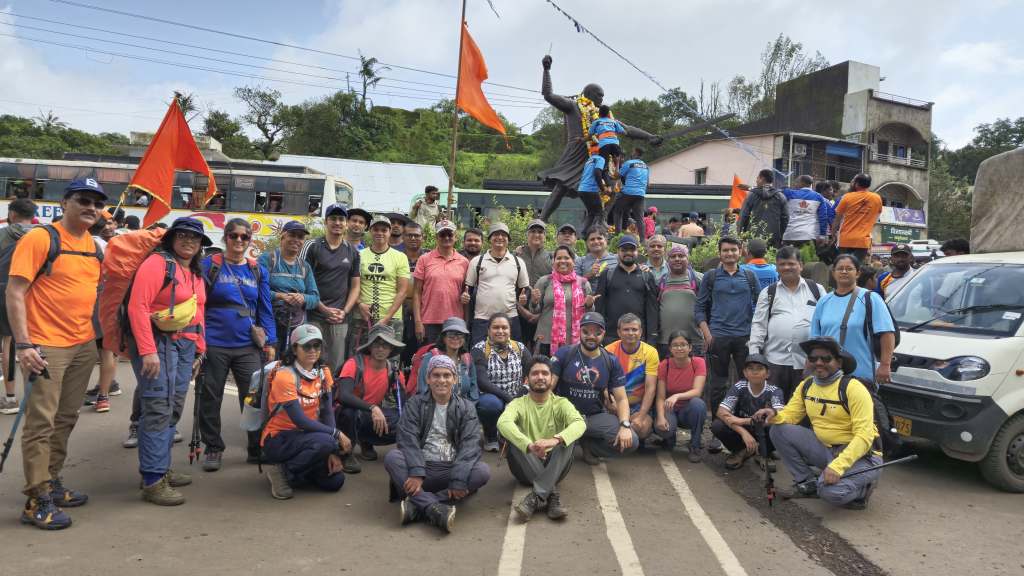
Day 1: From Panhala to Karpewadi Village
We began our trek at 10:30 AM, descending from Pusati Buruj, one of the fort’s bastions. The path took us through mud-laced paddy fields, slippery and deceptive in their calmness. By 11:30 AM, we had ascended to Mhasai Pathar, an expansive plateau stretching into the horizon. It took us about 1.5 hours to cross this windy, mist-covered grassland. The in-between drizzle and overcast skies kept the atmosphere cool, but the dampness made every step effortful.
We passed through several small villages, water streams and fields until we reached our lunch stop around 2 PM at Khotwadi. After a much-needed break and a delicious home-cooked meal, we resumed our walk to Karpewadi, our halt for the night.
By 6 PM, tired but fulfilled, we reached the village. Our accommodation was a modest setup, but a true blessing for our weary bodies. After changing into dry clothes, we waited for dinner. The moment I sat down, my legs nearly gave away — a strong reminder of how strenuous the day had been. With aching thighs and sore calves, I wondered if I’d be able to continue the next day. But I’ve always believed in fueling the body with good food, especially during treks — and so, I ate heartily and went to bed by 9:30 PM.
Day 2: Rain, Forest Trails & Solo Walking
To my surprise, I woke up fresh at 5:00 AM – pain-free. We had a quick breakfast at 7:00 AM and hit the trail again. The route today took us through Nilgiri (Eucalyptus) forests, rocky streams and rain-drenched open stretches.
The rain was relentless, soaking our gear and face alike. My face took the burnt – constant wet-dry cycles left my skin burnt and swollen for the next three days. I walked most of the route solo – a meditative experience in its own way. Other trekkers occasionally asked why I was wearing floaters instead of trekking shoes. I told them – I trust my Quechua sandals more than any shoes. They held up brilliantly, while I saw multiple pairs of shoes being “donated” to the trail after giving up mid-trek!
I walked non-stop, pausing only for a short tea break and steadily made my way to Pandherpani village for lunch at 1:05 PM. From there, the final 5 km stretch to Pawankhind was on tar road. Since I had walked the entire way during my 2016 trek and with my right foot starting to ache sharply, I decided to skip the final stretch and took the bus with others.
For those unfamiliar, Pawankhind is the place where Veer Baji Prabhu Deshpande and a small Maratha force made their last stand against the massive army of Adilshah. Their heroic sacrifice bought time for Chhatrapati Shivaji Maharaj to reach safely at Vishalgad – a turning point in Maratha history.
This time, I skipped the stairs leading down to the memorial site, as I was wary of aggravating the pain in my feet. Others from the group went down and offered their respects. I had visited the memorial in 2016 – so I was a bit okay staying back. Still, it’s a humbling moment, every single time, imagining the events that had happened.
By 5 PM, we began our journey back to Kolhapur Railway Station. After a quick dinner outside the station, we boarded the 8:55 PM train back to Mumbai. I could feel the fatigue and sharp pain in my feet.
I took the next day off to rest. Back in 2016, I could barely move for a week. This time, apart from my swollen face (thanks to rain exposure), I felt significantly better. By the fourth day, my face was back to normal and no leg pain remained from Day 2 onwards. My gym routine – especially leg day – had truly paid off.
A Route Under Threat – Mining vs. Heritage
While the Panhala to Pawankhind trail is a walk through history, nature, and valor — it may not remain so forever.
There are ongoing proposals / or approved proposals for bauxite mining in the region, they may permanently alter or even erase parts of this ancient trail. Local villagers, who have long acted as custodians of this heritage, are actively protesting against the mining activity, fearing irreversible damage to their land, livelihood and the historical landscape.
Trekking this route may soon become a rare privilege. If you’re passionate about conservation, sustainable travel and preserving history, now is the time to experience and support this region – respectfully and responsibly.
Final Thoughts: Beyond Endurance
The Panhala to Pawankhind trek is more than just scenic landscapes and historical monuments. It’s a journey of inner strength, of walking in the footsteps of legends and testing your own limits – physically and mentally.
This time, my goal was to gauge my endurance and I’m happy to say, the results were deeply satisfying. Nature, history, rain, pain, and perseverance, it all came together in a way that left me humbled and stronger than before.
Until next time, Pawankhind. Jai Shivaji, Jai Bhavani!
 Backpack, Camera & Me