Every year, I make it a point to step out of my comfort zone and go on a solo trip. The last two years, however, were a different story. Covid threw a wrench in my travel plans, leaving me grounded. But this time, in June 2022, I was determined to make it happen. No more excuses, I was ready to backpack and explore new places.
The Plan – I had a simple yet exciting itinerary in mind: Gulbarga – Visakhapatnam – Araku Valley -Borra Borra Caves. This was my first step back into the world of solo travel, and I couldn’t wait to see what awaited me.
My journey began with a late-night train ride on the Nagercoil Express. I boarded the train at 8:30 PM from Dadar, heading to Gulbarga (also known as Kalaburagi). The journey was supposed to take around 8 hours, with a 5:00 AM arrival, but the train was 1.5 hours late.
Arriving at Gulbarga station on June 5th, 2022, the first challenge was navigating the aggressive auto-rickshaw drivers. As soon as I stepped out, they started hovering around. I tried my usual trick—asking for a drop to the nearest landmark instead of directly naming my hotel. This way, I hoped to avoid being overcharged, but no such luck. One driver quoted me a whopping ₹250, claiming that they sit idle for hours at the station and need to compensate for it. I wasn’t buying that excuse and instead walked to the nearby bus stop. Another auto stopped and this time, I bargained it down to ₹100 due to the luggage. The destination? Kyriad Gulbarga, a hotel I had booked online. The hotel was located on the third floor of Gold Hub Mall, but since it was Sunday, all the shops in the mall were closed. After a quick introduction and a much-needed welcome drink, the hotel staff informed me that check-in wasn’t until noon. They also wanted ₹1500 for early check-in, which seemed steep for just 5 hours. Instead of paying the early check-in fee, I decided to keep the luggage in the hotel reception itself, explore the city and return around 11 AM.
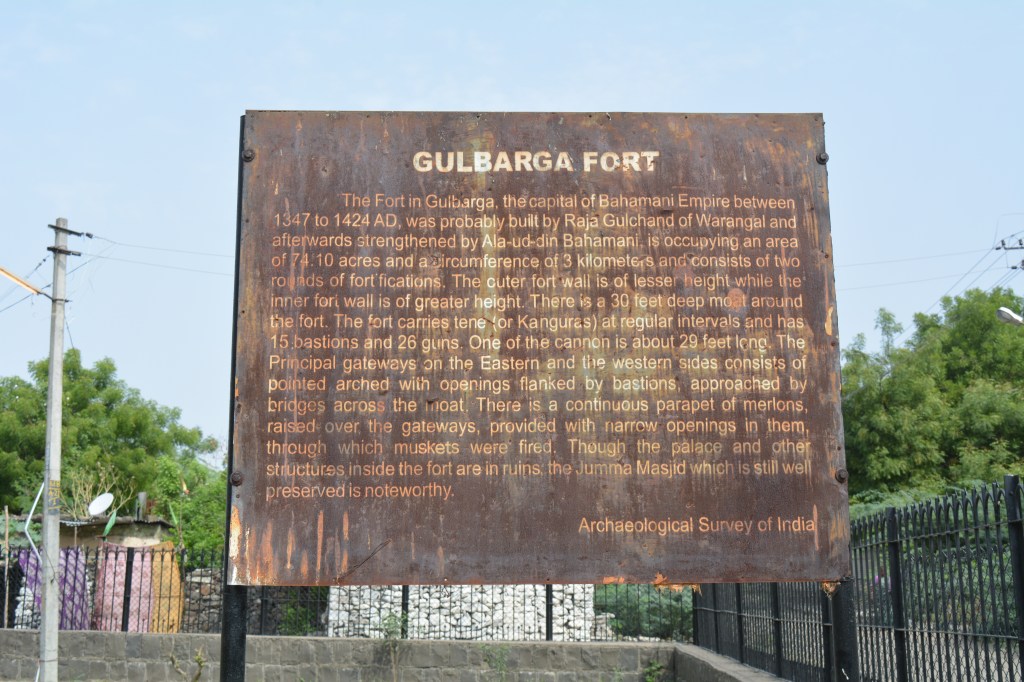
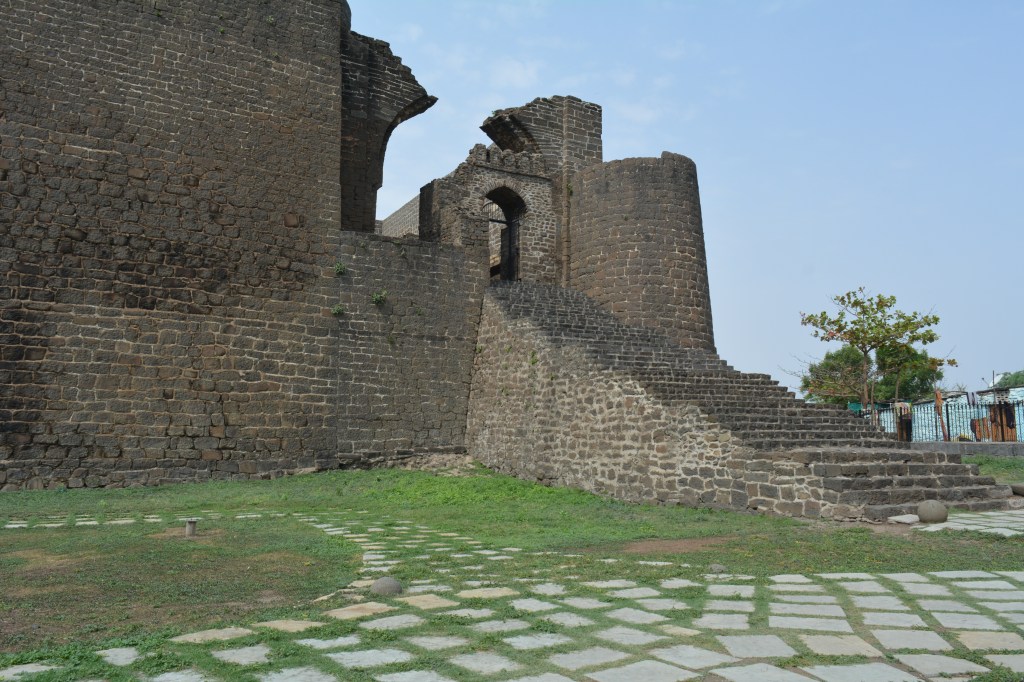
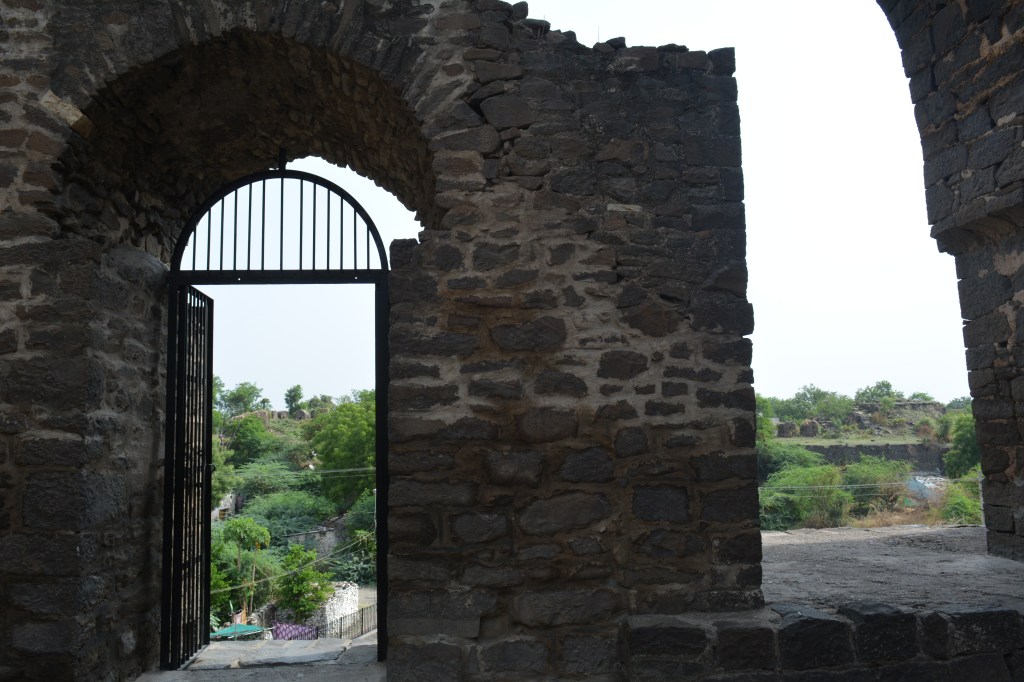
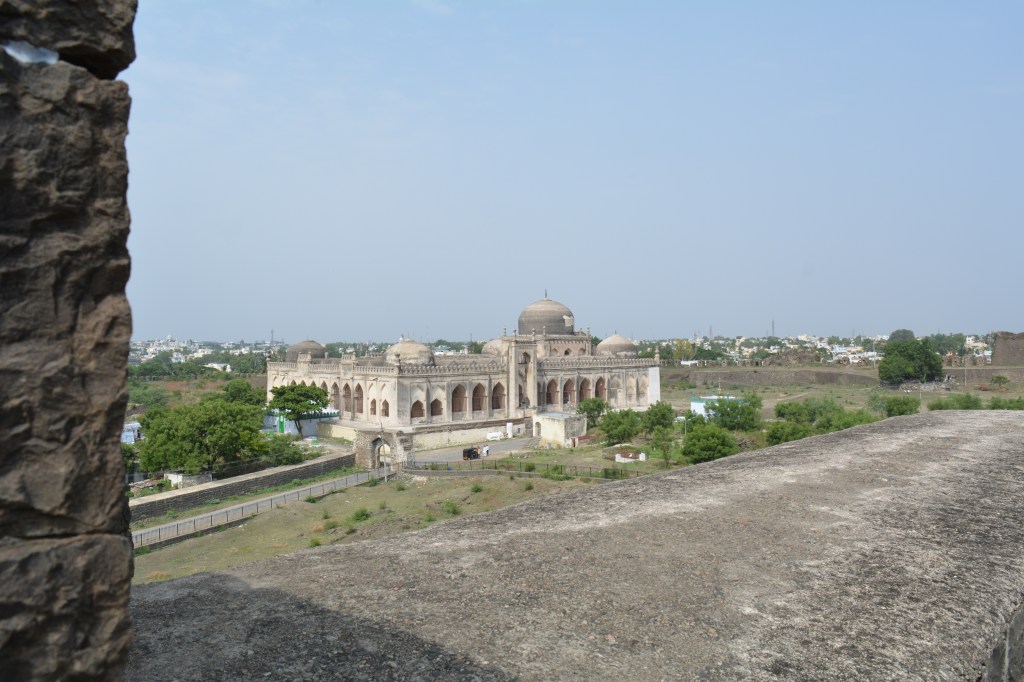
My first stop was Gulbarga Fort, a 14th-century structure originally built by Raja Gulchand of Warangal and later fortified by the Alauddin Hasan Bahman Shah, the Bahmani Sultanate between 1327 and 1424. The fort, though in ruins, still had its notable features, such as the Ranmandal Bastion, which housed three large cannons and the Jamia Masjid. The Fort has 15 Towers (Bastions) and 26 guns with 30 feet (9.1m) deep moat built around. Each gun located inside the fort is 8 metres (26 ft) long and is still well preserved. (It is said that the Bahmani Sultanate claimed lineage of the Sasanians and the motifs on their buildings, particularly the crowns of the arches that they built depicted an emblem of the crescent and occasionally a disk that was closely reminiscent of the crowns of the Sassanian emperors.)

The highlight of my visit was the Bara Gazi Tope, one of the longest cannons in the world (interest piqued after visiting the Bijapur’s Malik-e-Maidan Tope). Made from an alloy (Panchdhatu), this cannon measures 2 ft in diameter, 7 inches thick, 29 feet in length and a circumference of 7.6 ft. This This huge unique weapon weighs around 70-75 tonnes. Standing there in front of the cannon, I couldn’t help but marvel at the engineering prowess of the Bahmani Sultanate.
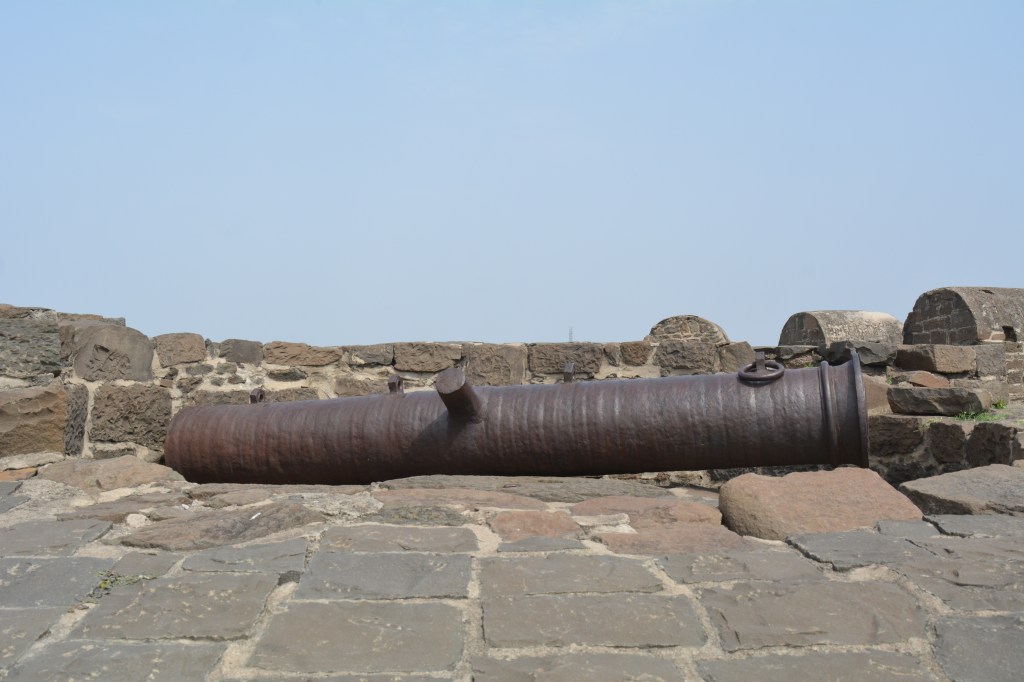

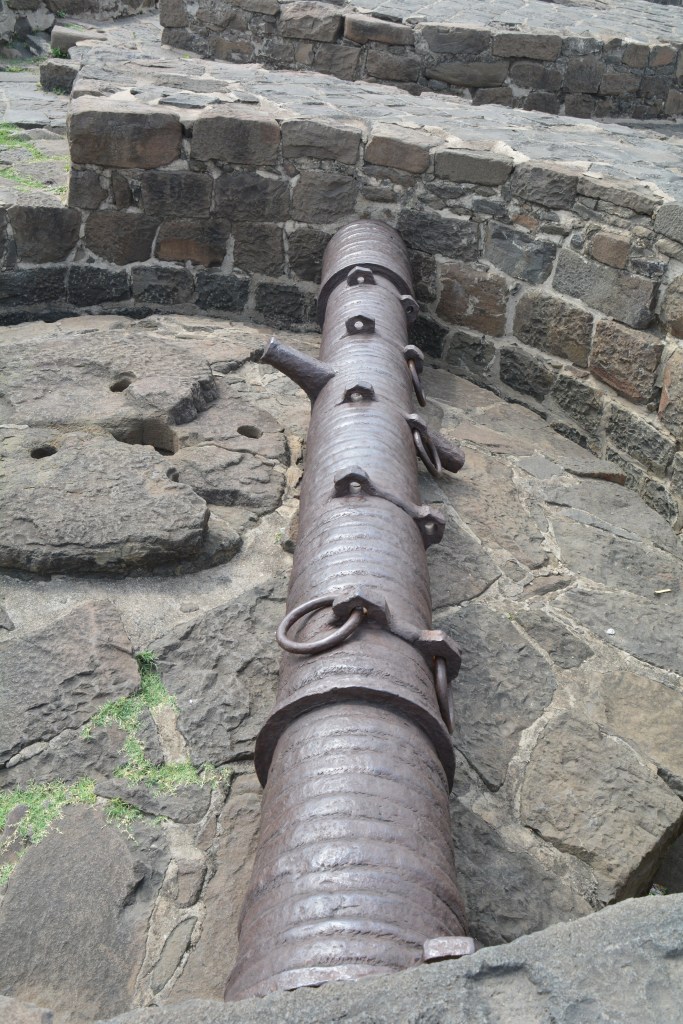
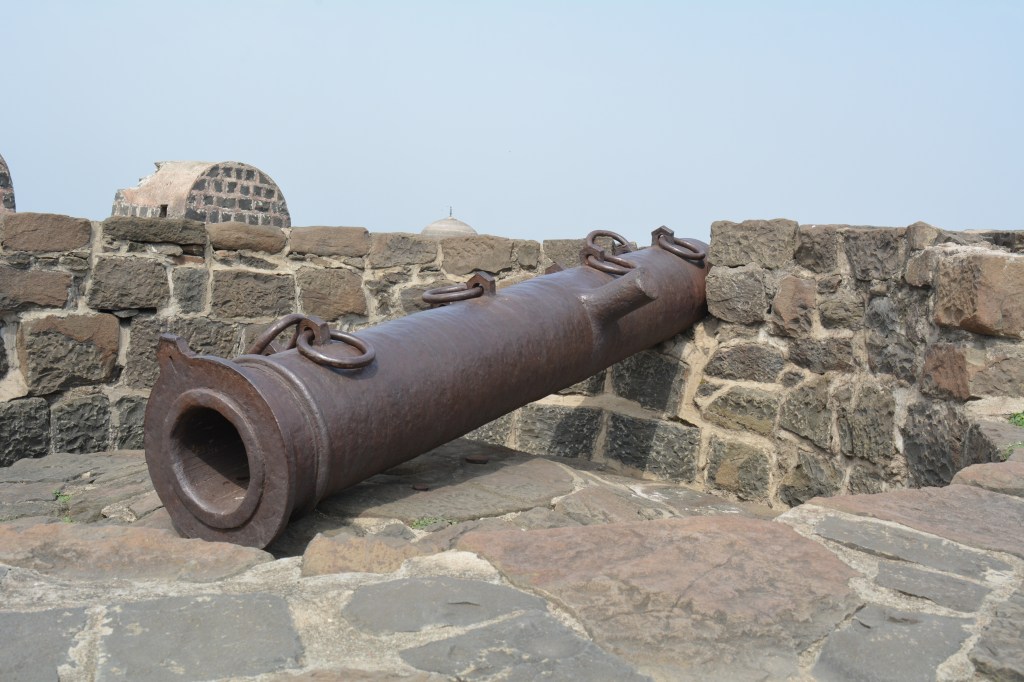
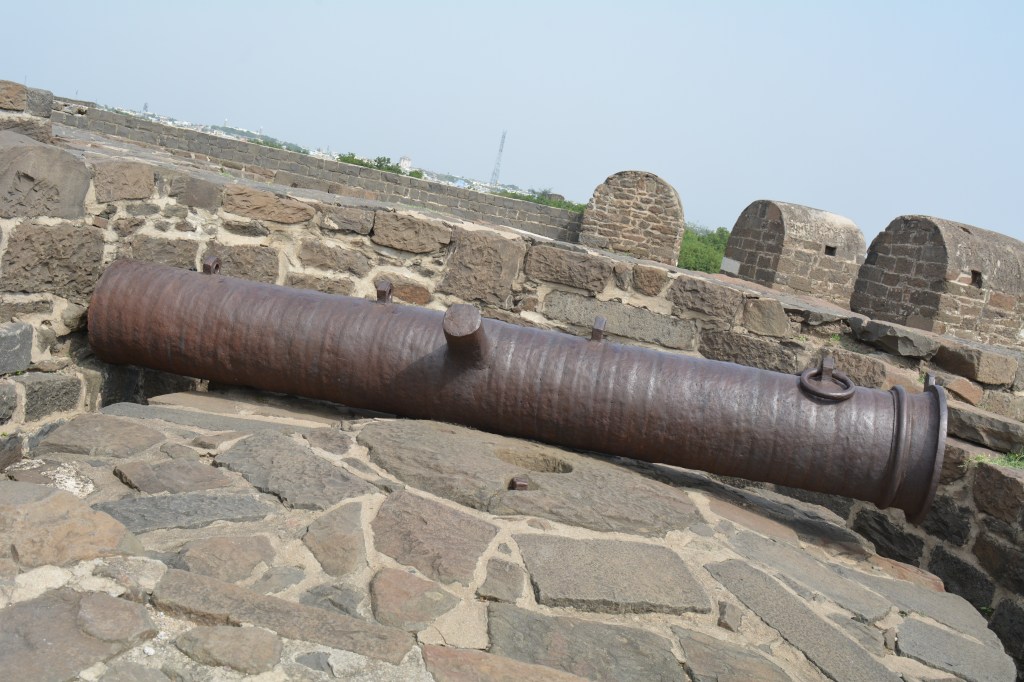
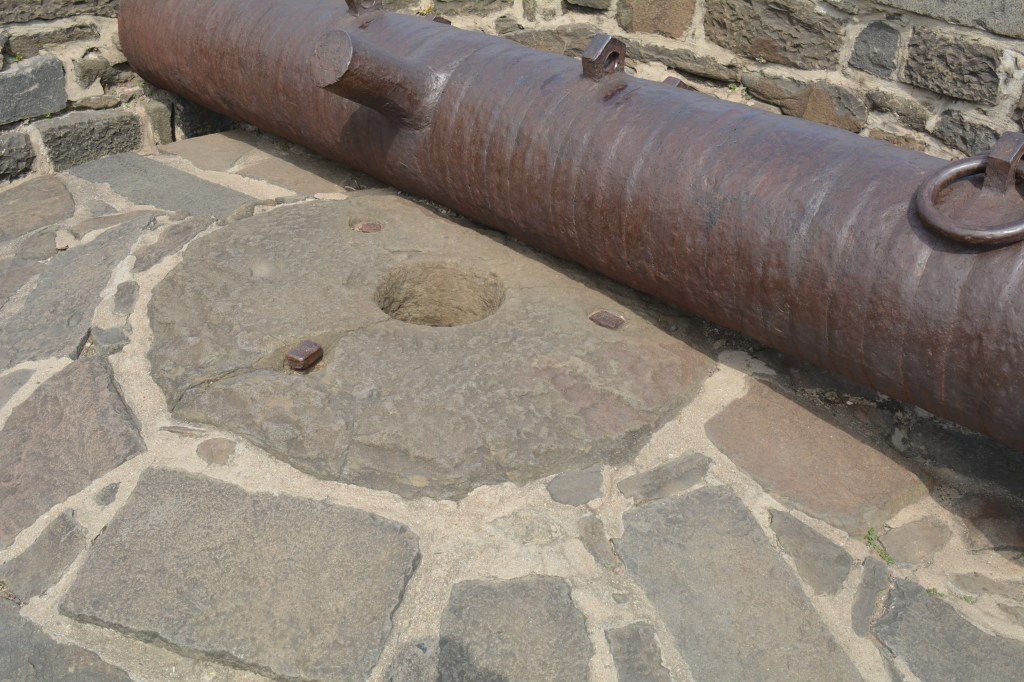
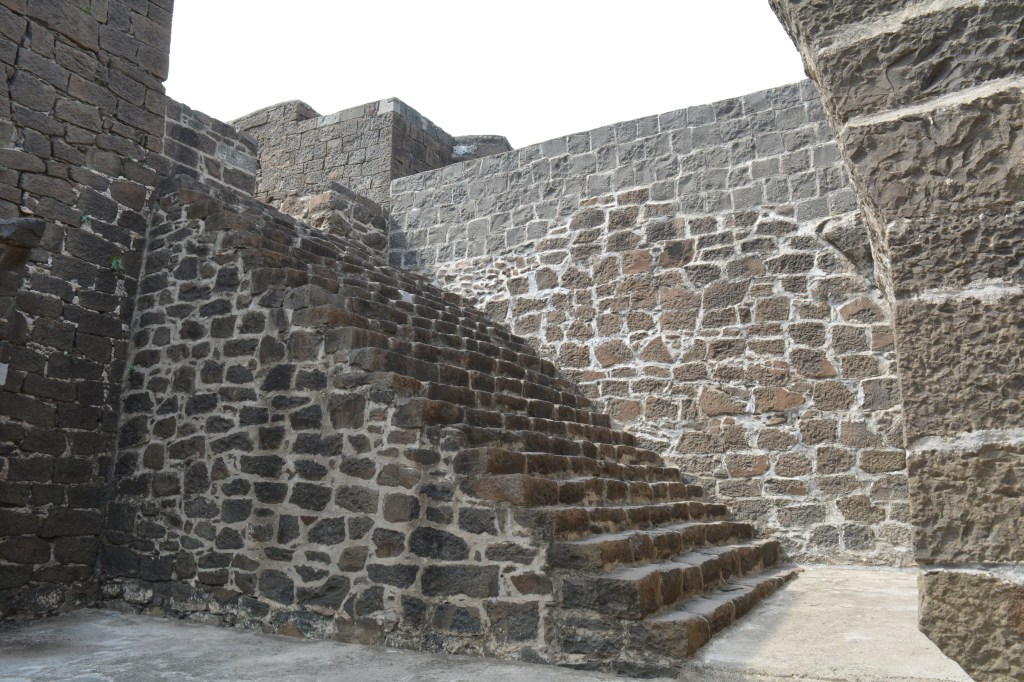
There are rock cut stone steps to climb the bastion, leading to the top, where the 3 huge cannons are placed.
After the fort, I ventured to Jamia Masjid, a beautiful Persian-style mosque built in 1367. To visit the Jamia Masjid, one must go outside the fort gates, walk around the bastion and reach the mosque from the back. I took an auto along the route and had it park just outside the mosque to save time for when I returned. The path was uneven, with rocky terrain and a small gate to cross.
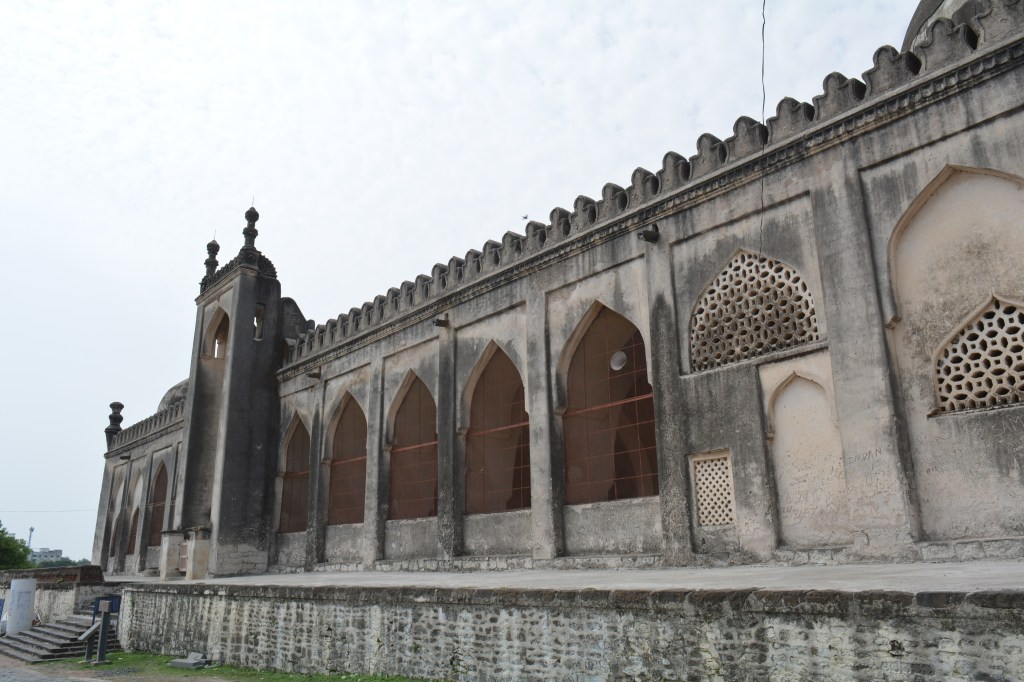
Unfortunately, the caretaker had gone to a wedding and locked the doors of the mosque, so I was only able to admire it from the outside. Despite not being able to enter, the beauty of the mosque’s architecture was still captivating, especially its domes and arched columns, which are rare to find in mosques of this region. There are few stalls outside to eat. After this visit, I asked the auto driver to drop me at Haft Gumbaz. The small iron gate was locked, I looked around for some place to pass the time. There is a restaurant just opposite the Gate, I sat there for sometime for breakfast, hoping that the gate will be open by 09:00 or 09:30 am. After breakfast, I asked the hotel person, regarding the timing. He said the person arrives by 09:00 am. From 08:30 till 10:00 am, I waited. Finally got fed up, thought of coming back later in evening.
By the time I returned to my hotel, it was almost 11 AM and I was finally allowed to check in. The room was a relief, especially after the long journey and early morning exploration. Room was very clean and good for business travellers as well as solo travellers like me. Only problem was, there was no window, also the AC was centrally controlled.
After some rest, I hired an auto for ₹600 to take me to Hazrat Khwaja Bande Nawaz Dargah, a serene white monument dedicated to a 15th-century Sufi saint. It has been built in the Indo-Saracenic style.
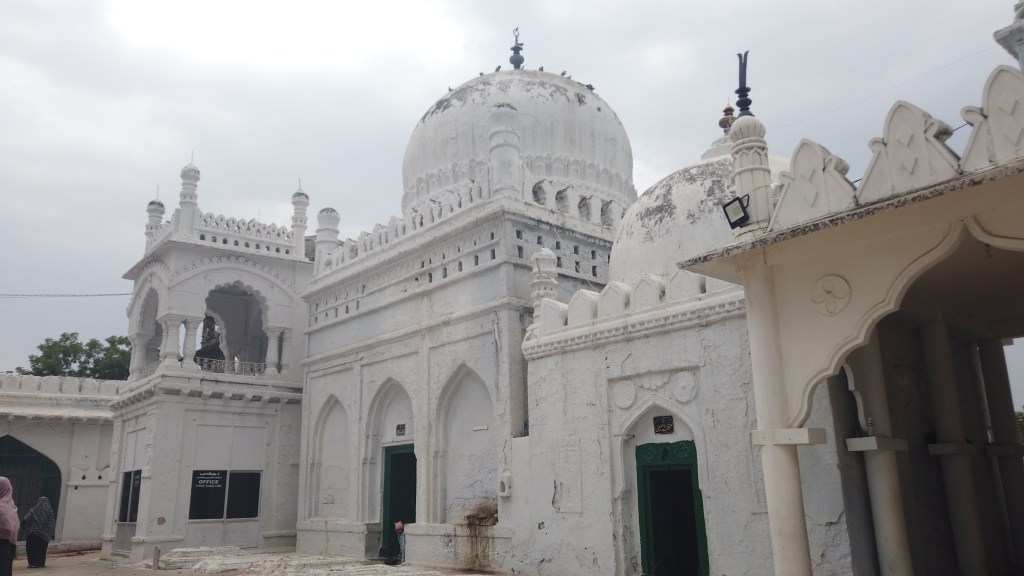
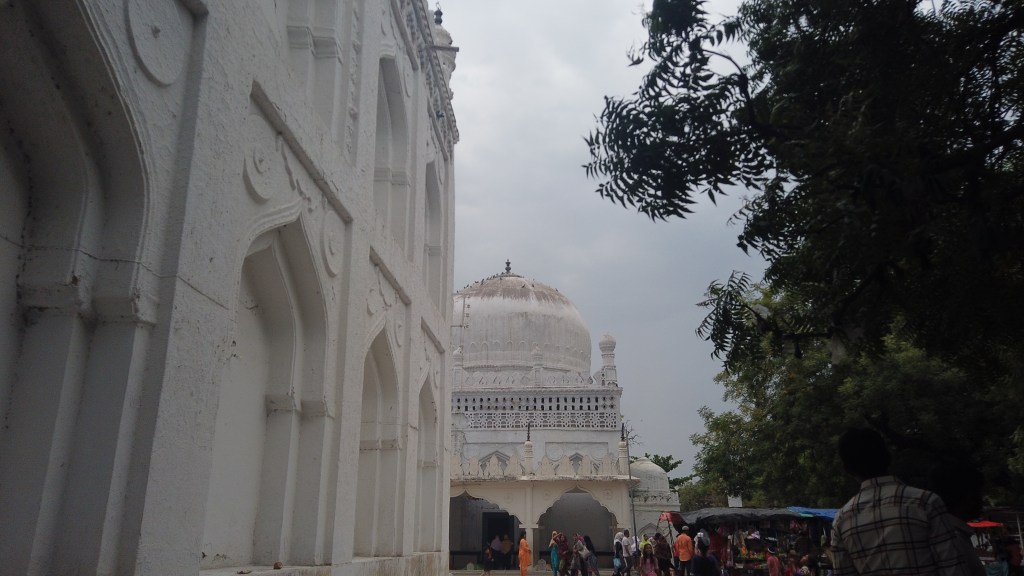

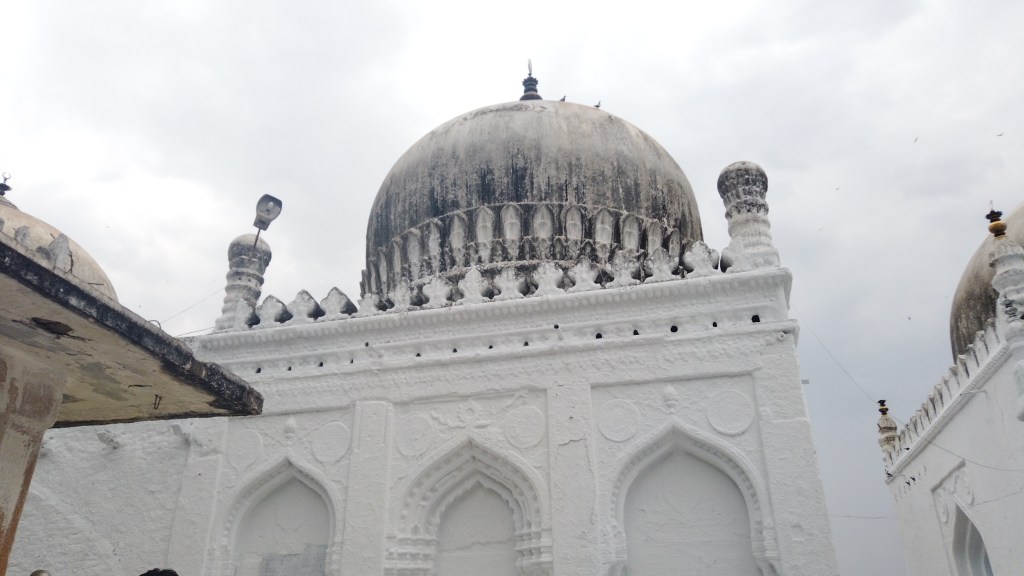

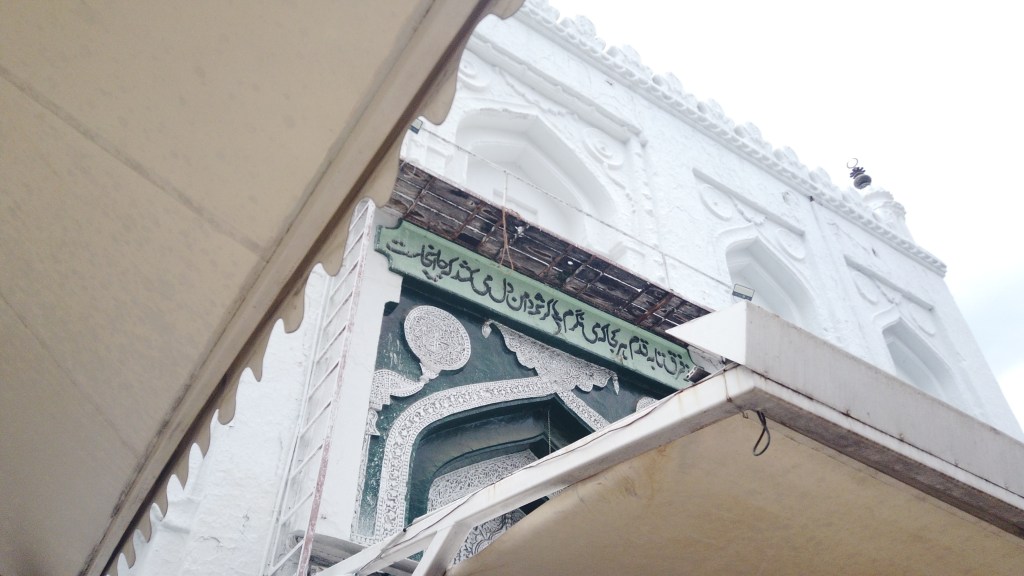
The walls of the tomb have paintings, fusion of Turkish & Iranian Art. It is a huge complex with tombs, madrasas & gateways. The complex was buzzing with people and I spent some time soaking in the atmosphere before moving on to my next stop: Shor Gumbaz.
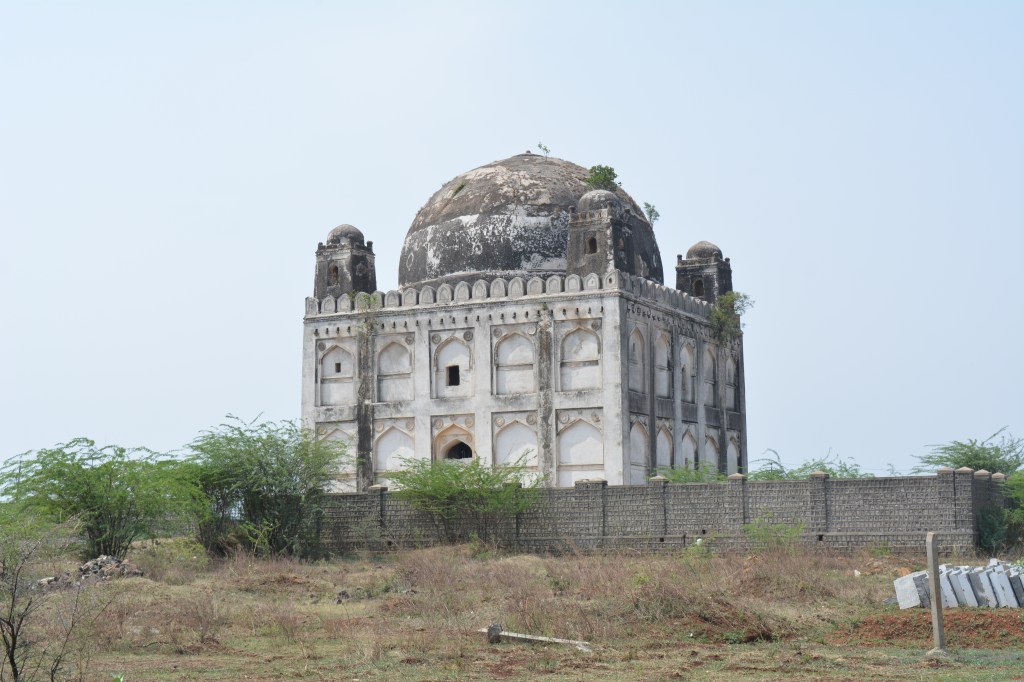
Shor Gumbaz or Chor Gumbaz had an air of mystery. Resembling Bijapur’s famous Gol Gumbaz, it wasn’t a tomb but rather a check post, and its isolated location added to the intrigue.
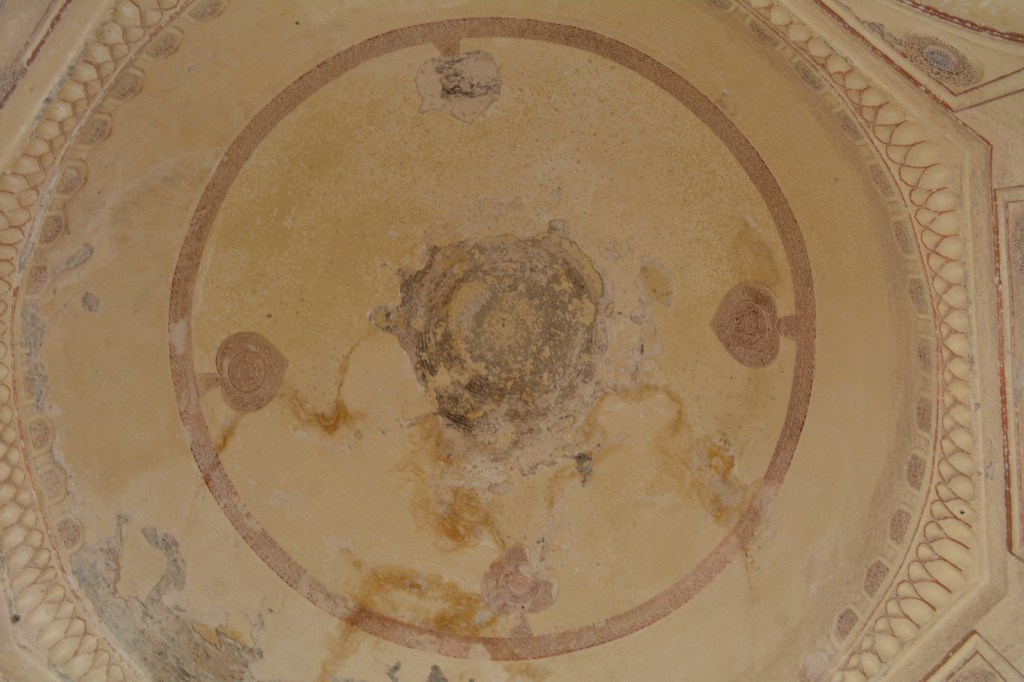
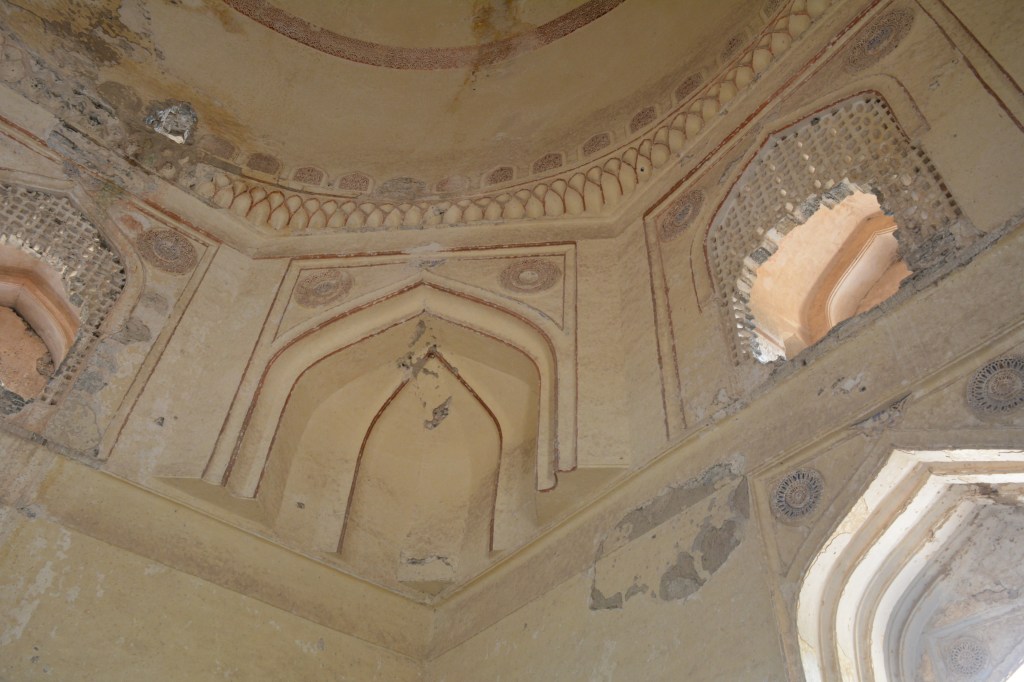
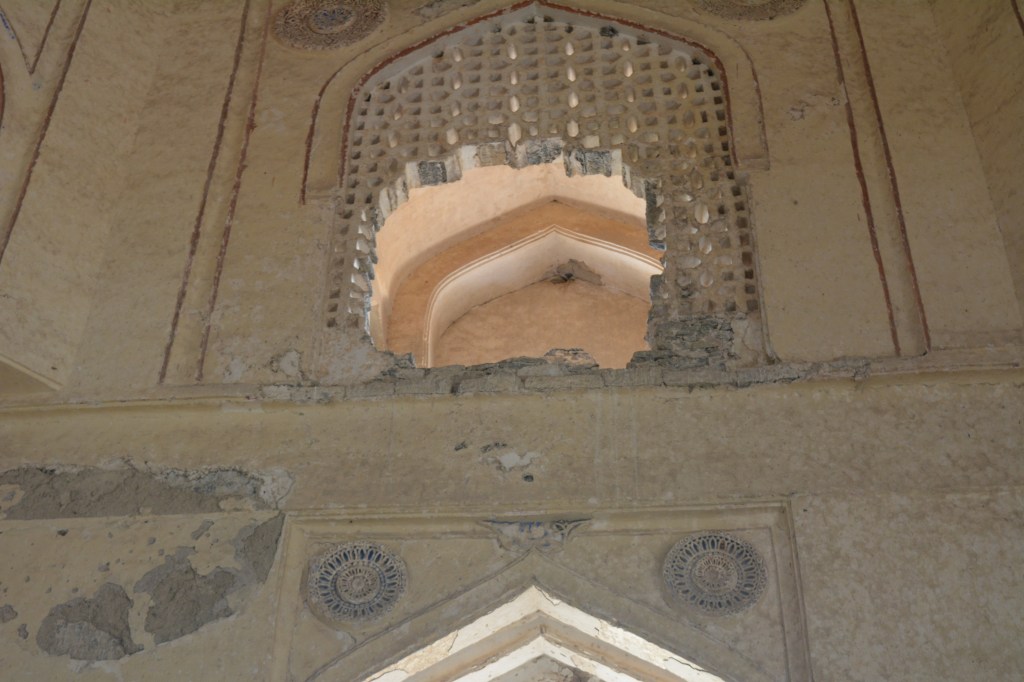

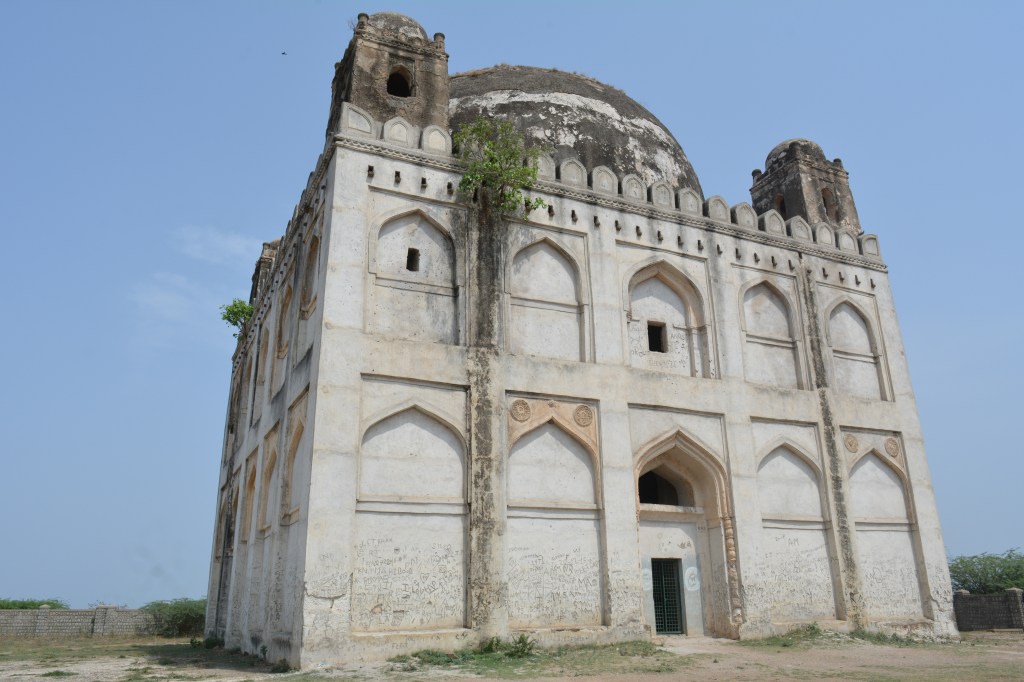

The drive there was a bit tricky, but once I reached, I quickly realized it was an eerie, desolate spot with no one around. It lived up to its name, which roughly translates to “Thief’s Tomb.” I spent only 15 minutes there before moving on to my final destination for the day.
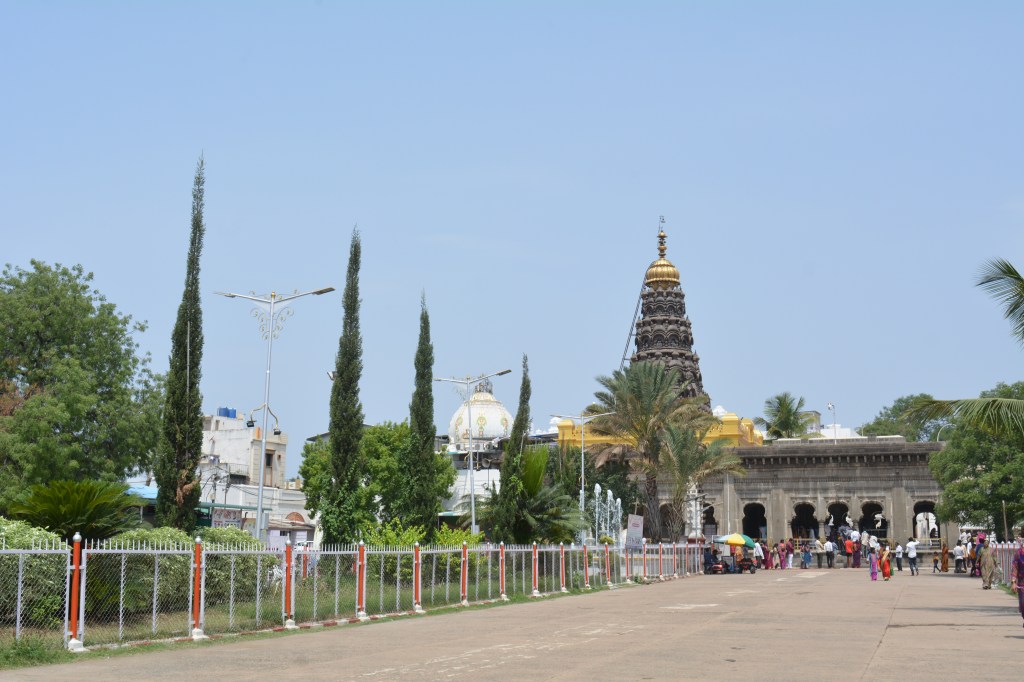
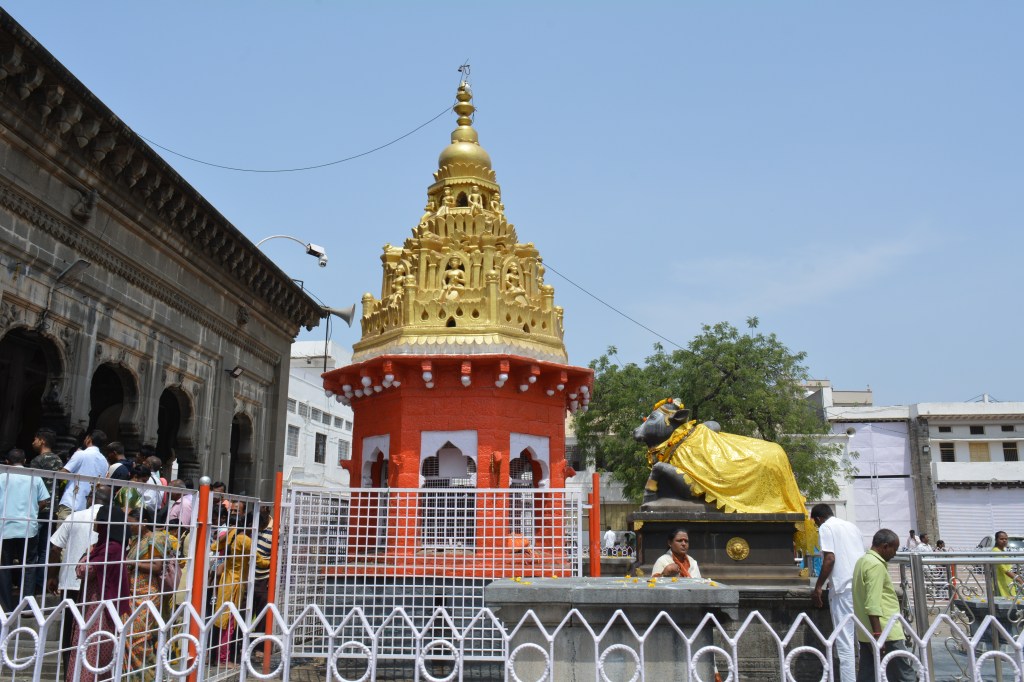
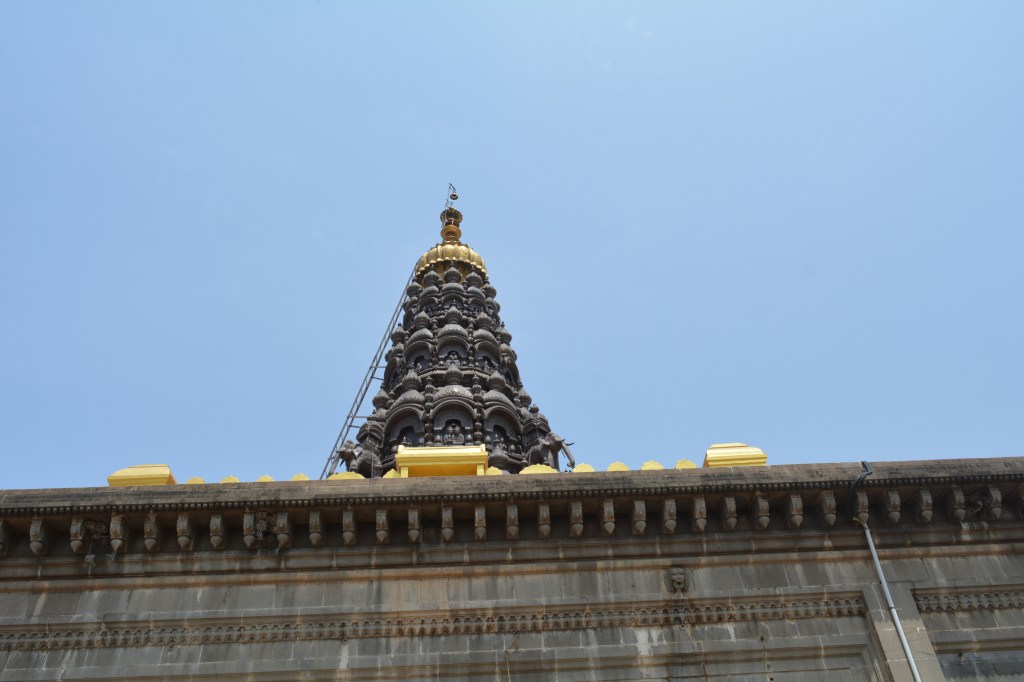
Next, I visited Sharana Basaveshwara Temple, dedicated to the Saint Basaveshwara. The queue was long, but it moved quickly, and I soon found myself inside the sanctum. Photography was not allowed inside the temple.
Afterward, I decided to check out Haft Gumbaz (Seven Tombs). The gate was locked and I waited for a while, hoping someone would arrive to open it. To my surprise, I saw a few people walking in. I asked them, how they got inside, they had jumped over the gate. I did not think of doing that, upon closer inspection, I noticed that a lock was placed over the gate that appeared to be closed. Despite its outward appearance, the gate was, in fact, open. A wave of relief washed over me as I contemplated the prospect of finally gaining access and learned that the gate wasn’t locked at all—it was just a trick of the eye.
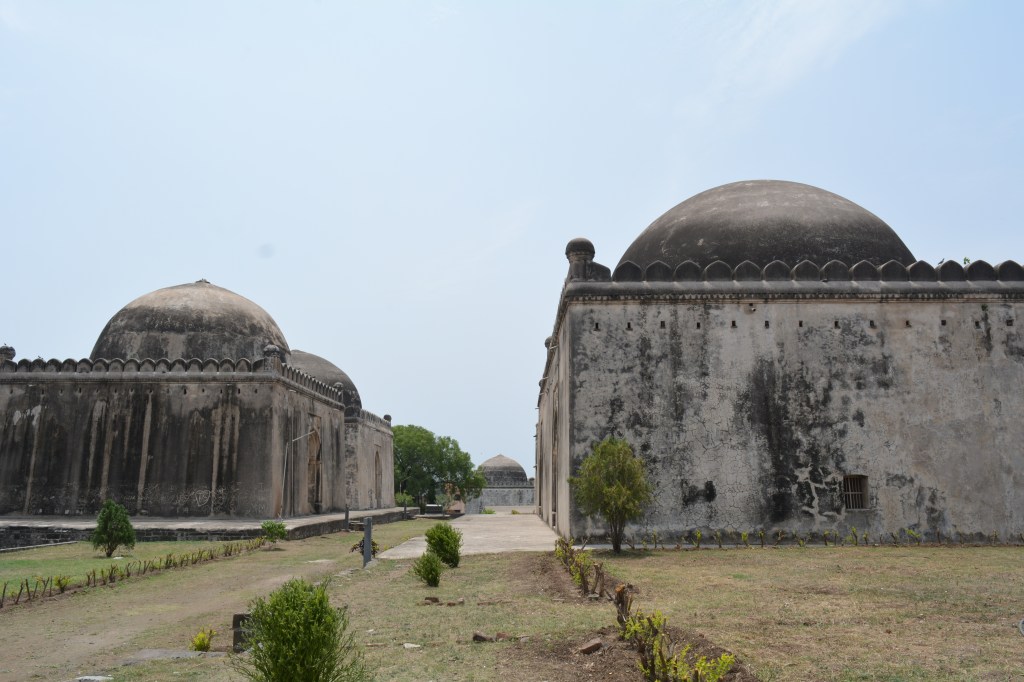
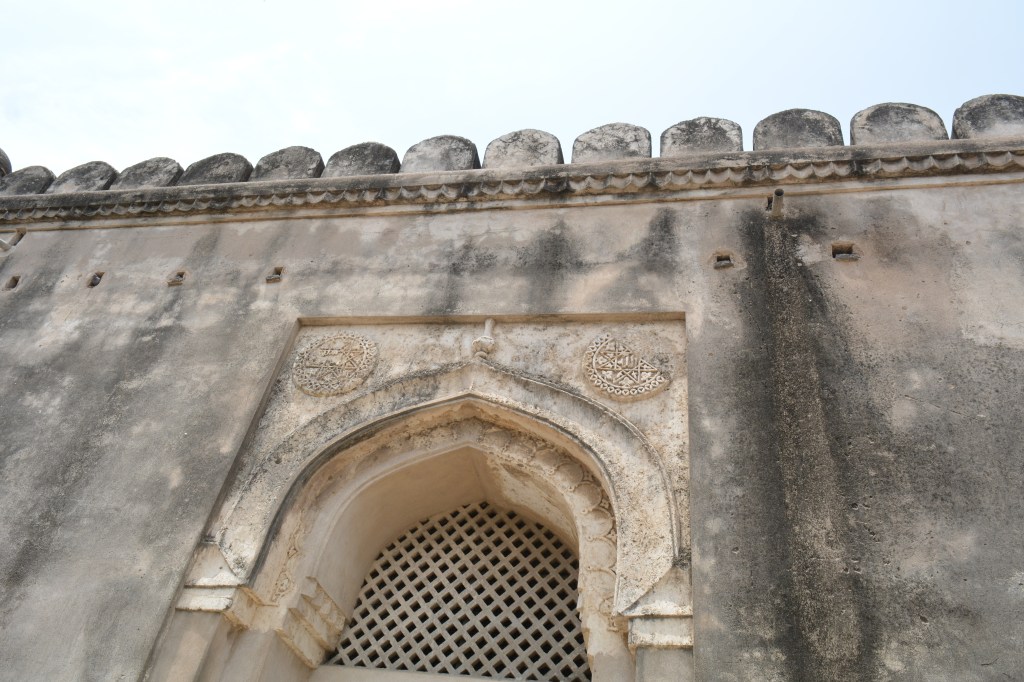
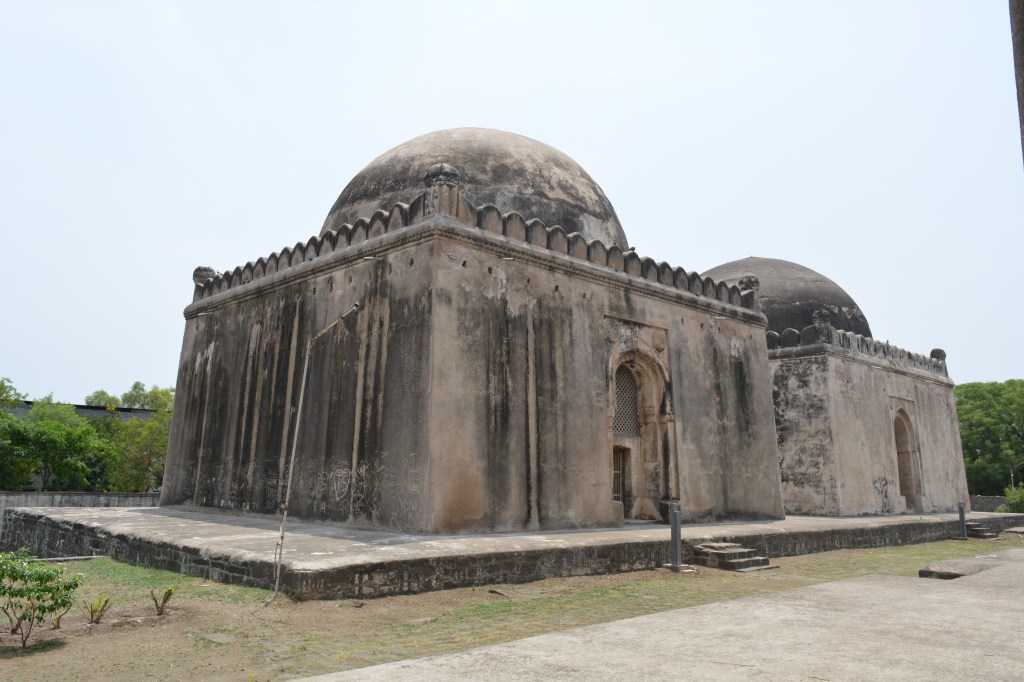
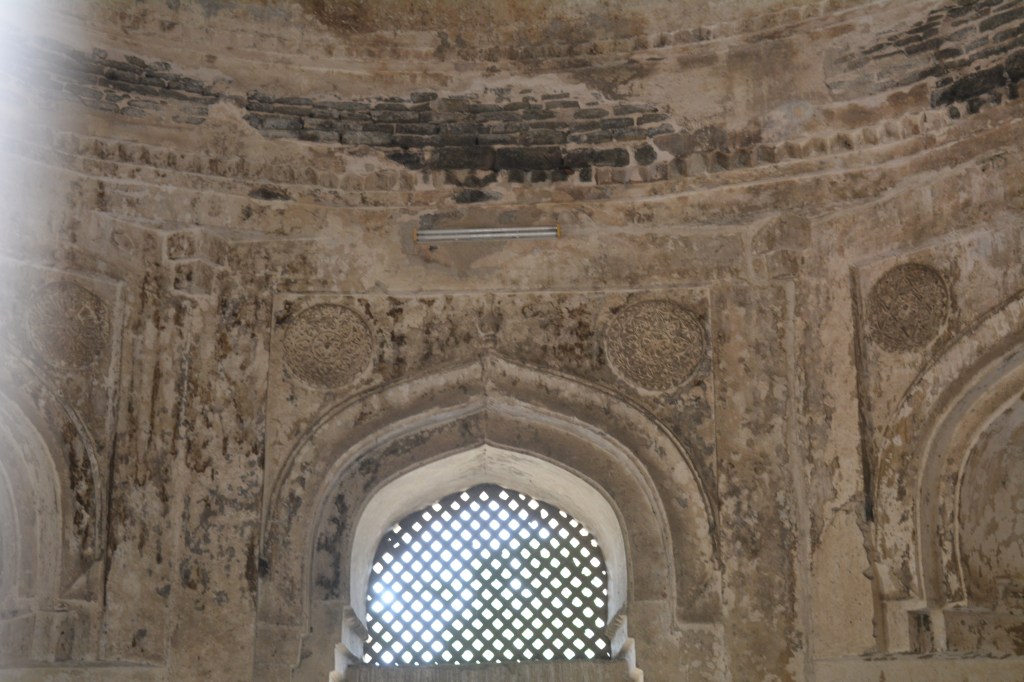
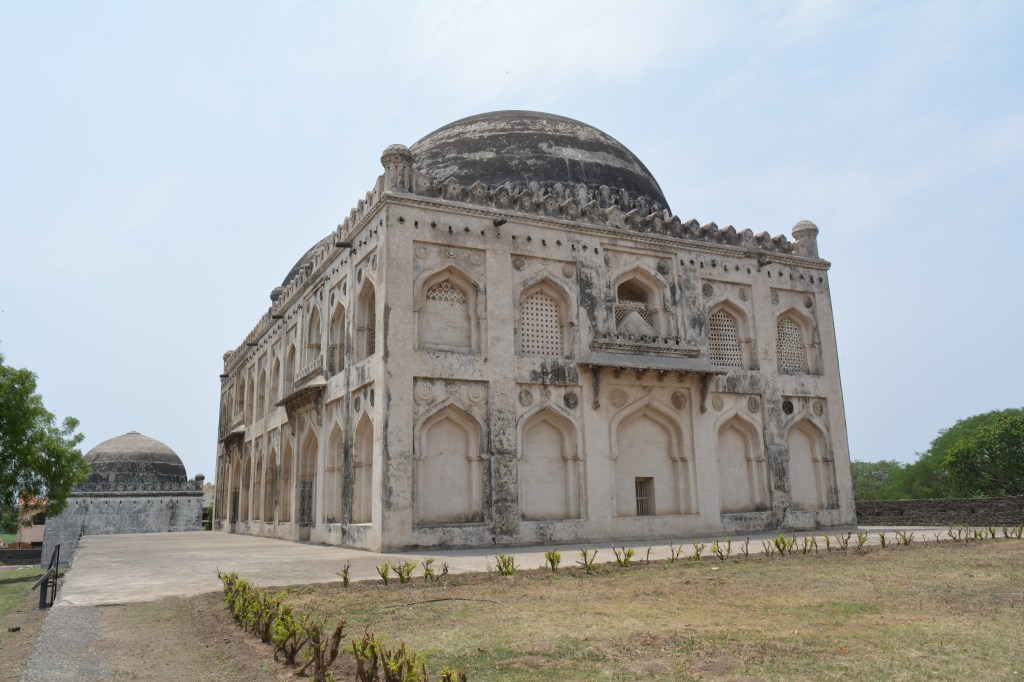
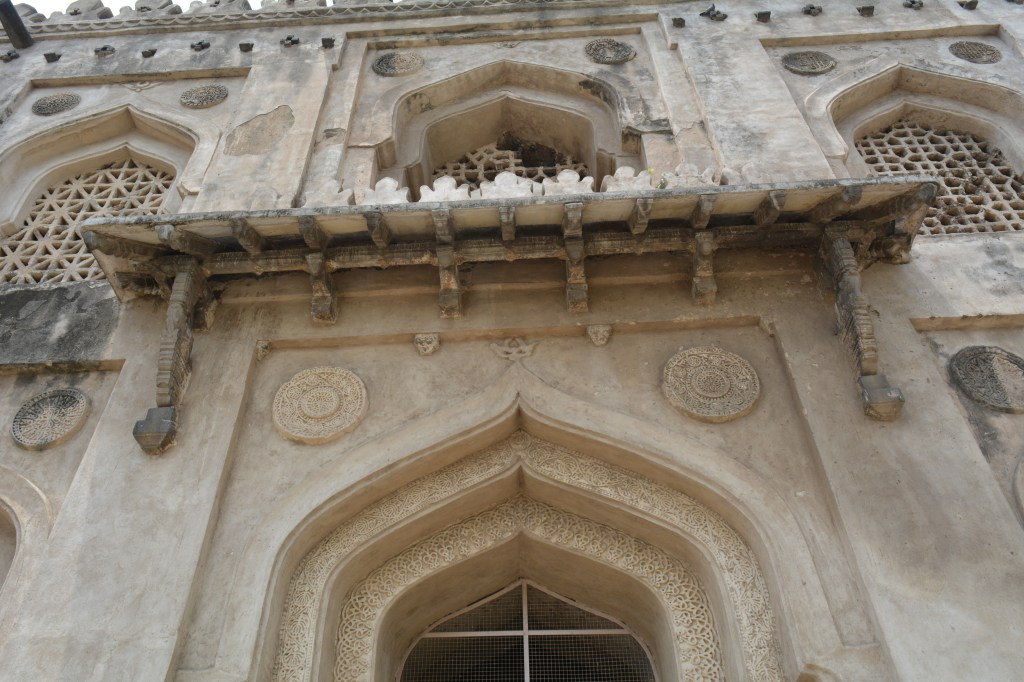
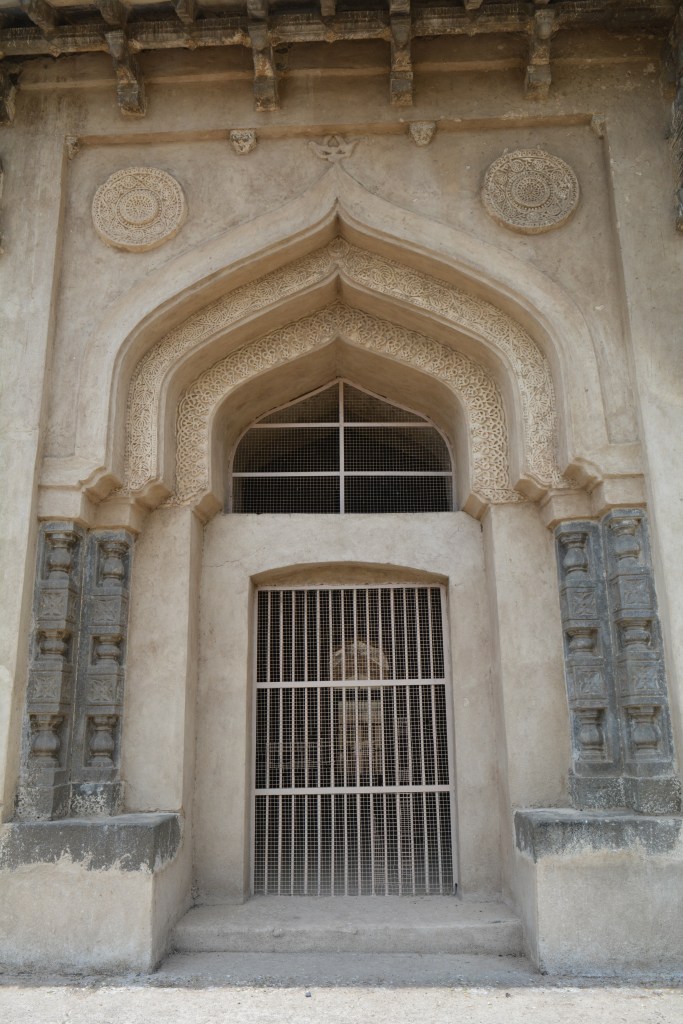

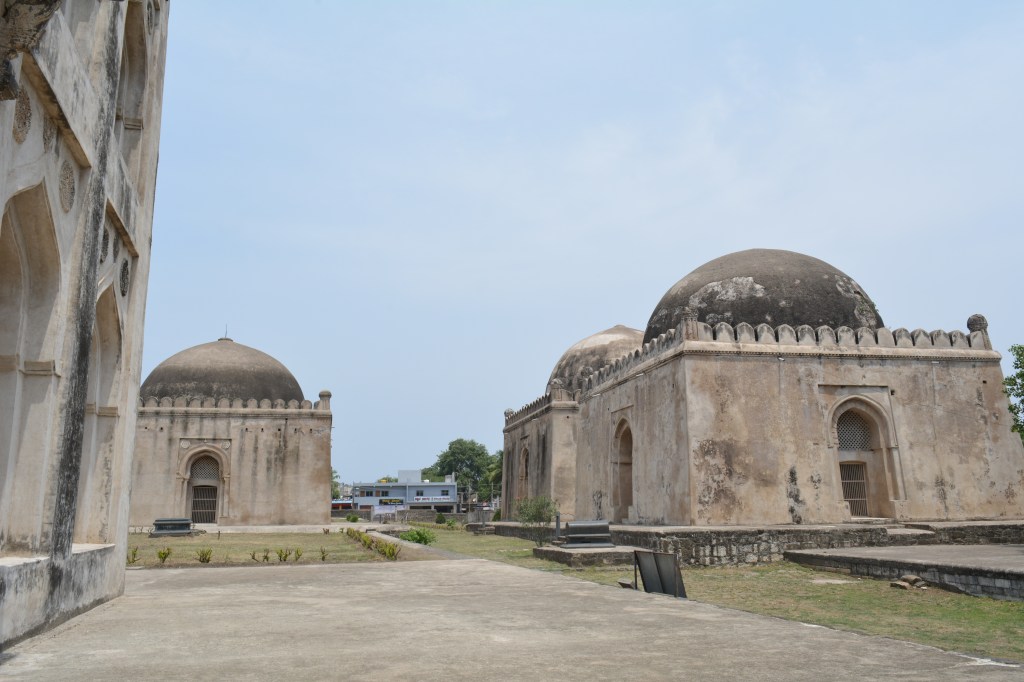
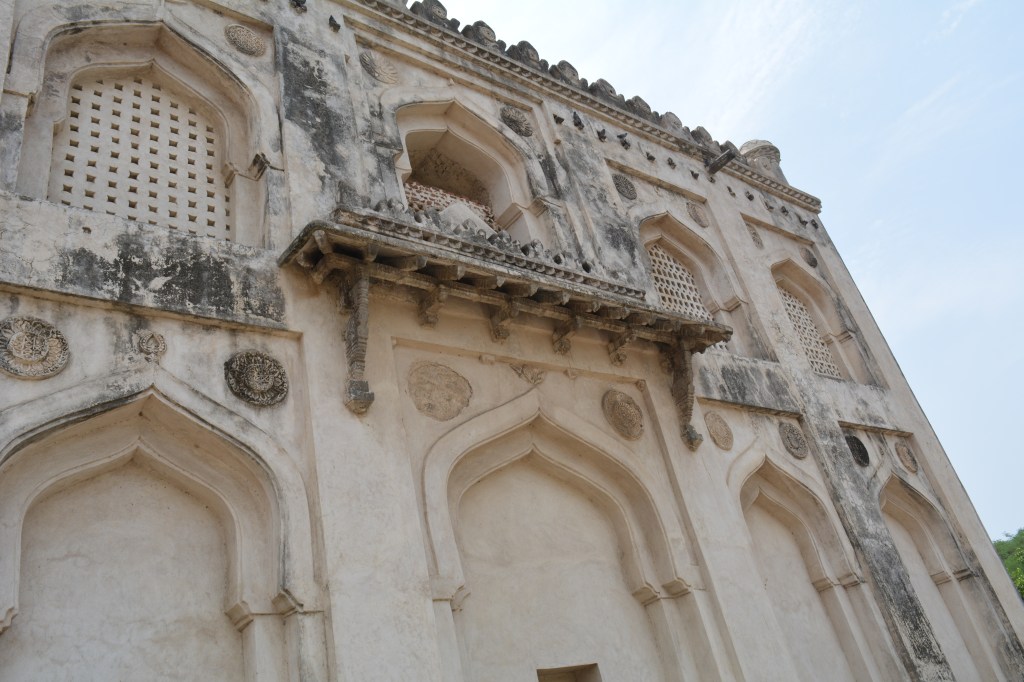
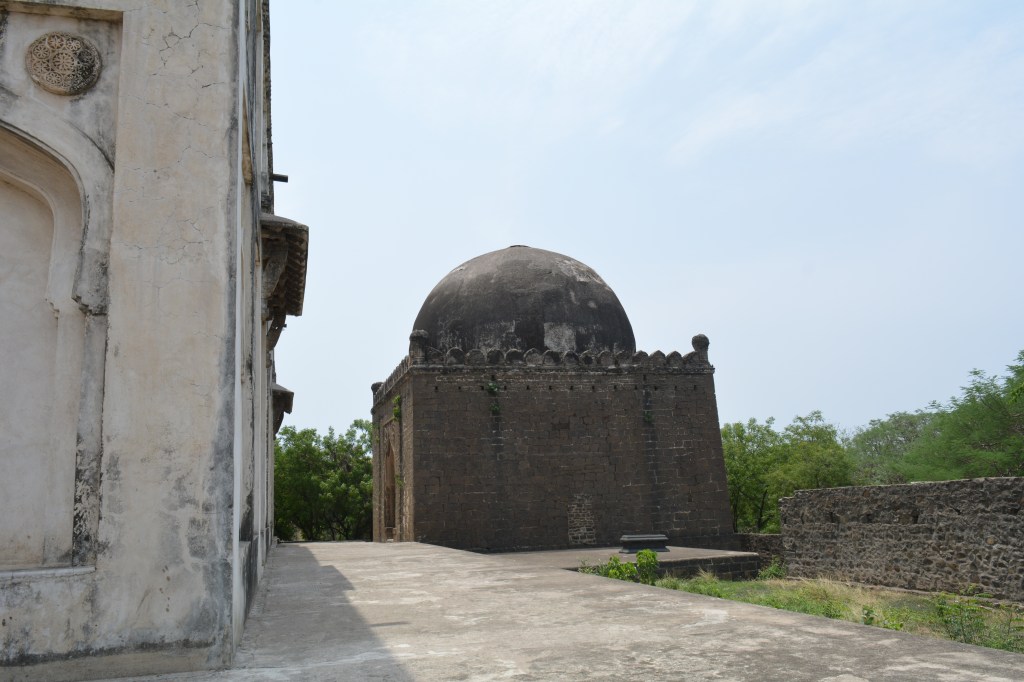
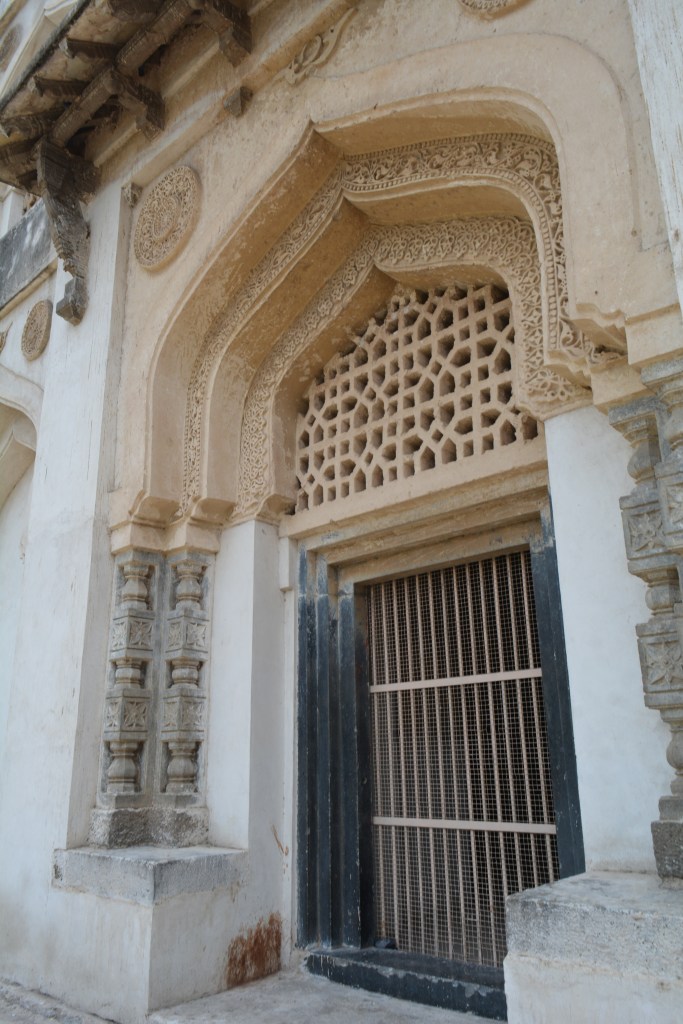
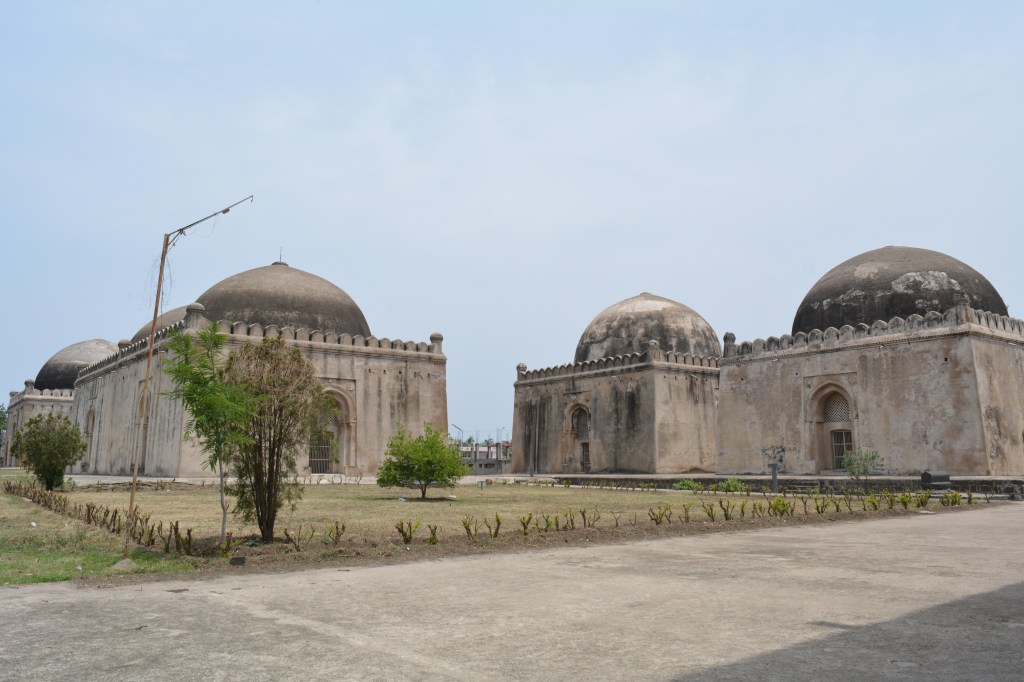
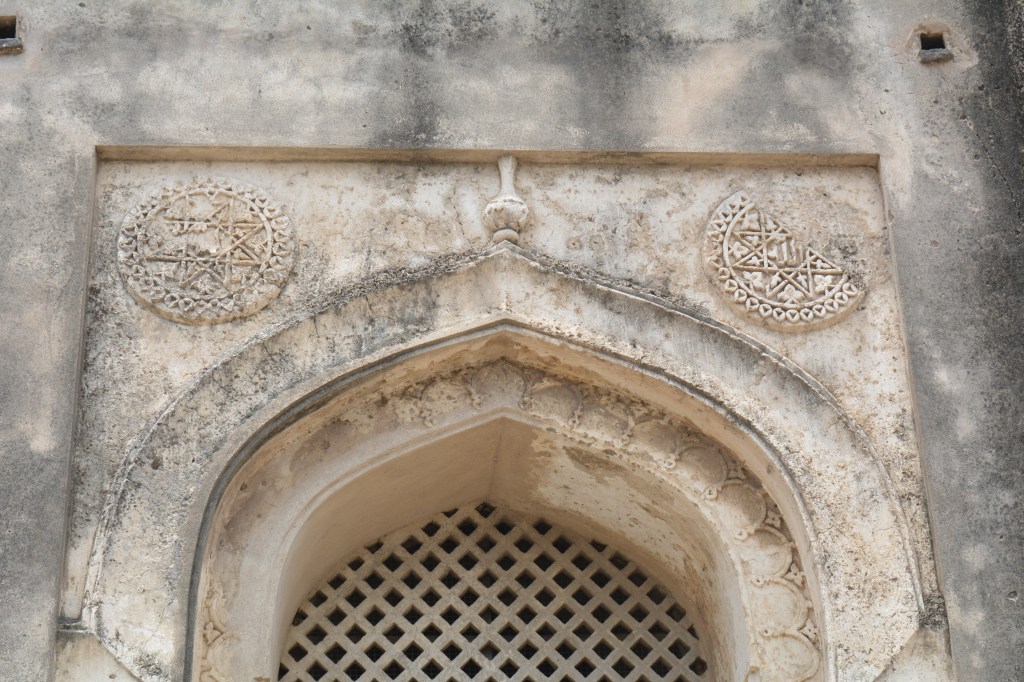
The tomb complex, built by the Bahmani Dynasty between 14th & 15th Century, is home to seven monumental tombs with beautifully manicured gardens. Each tomb is a masterpiece of Indo-Islamic architecture. I took my time exploring, appreciating the fine details that have survived through centuries. These are fine examples of Indo-Islamic Architecture. There are unique two domed structure belonging to Da’ud Shah & Firuz Shah. Earliest Tomb is of Mujahid Shah. There is one more tomb of Ghiyath al-Din a typical square plan single domed.
After a long day of exploring, I returned to the Gold Hub Mall and had dinner at Punchin, a restaurant offering a delightful fusion of Punjabi and Chinese cuisine. The ambiance was cozy and the food was just what I needed to cap off the day.
My time in Gulbarga was a mix of history, architecture, and adventure. Unfortunately, most of these monuments are in dire straits. Needed to be preserved by the locals, rather than spoiling it. From ancient forts to serene tombs, I learned a lot about the rich heritage of this region. But most of all, I felt a sense of freedom—stepping out of my comfort zone, exploring new places and embracing the solo journey once again. And this was just the beginning. Stay tuned for more stories from my trip as I continue my journey towards Visakhapatnam and the mystical Borra Borra Caves.
Until next time!
 Backpack, Camera & Me